The Role and Responsibility of Textile Sorting Plants in Romania
Sorting operators prepare post-consumer textiles for reuse or recycling through a rigorous process.
The detailed process of preparation for reuse or recycling
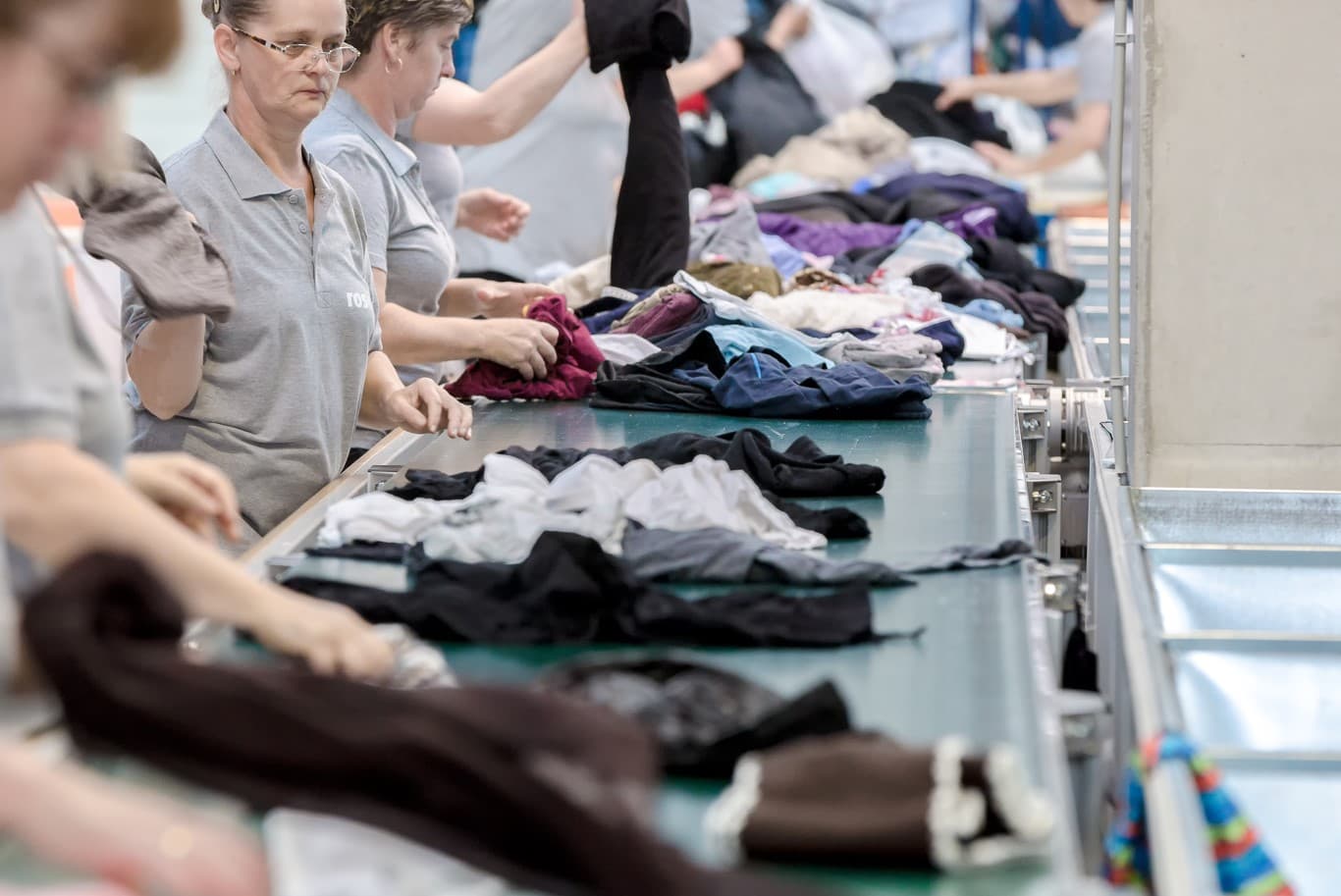
Sorting operators prepare collected post-consumer textile waste for reuse or, where reuse is not possible, for subsequent recycling. It is a complex process consisting of several stages. The requirements for sorting textile waste with the aim of reuse are based on the sorting specifications of the European industry association EURIC Textiles and Romanian legislation. Although the sorting process may differ from one operator to another, the following requirements form the mandatory basis for ensuring high-quality sorting:
1. Storage
Collected post-consumer textile waste is stored in a covered area under dry conditions. Storage time must be kept to a minimum whenever possible.
2. Feeding into the sorting process
Collected post-consumer textile waste is carefully fed into the sorting process without the risk of damaging reusable items.
3. The sorting process
The sorting area must be a dry and clean workplace and must be equipped with everything necessary, such as labelled containers, bins, equipment for moving bags and containers, sorting tables, etc.
4. Pre-selection
Removal of all foreign materials and impurities from the collected post-consumer textile waste.
During the sorting process, higher-quality fractions (reusable textiles sorted at the individual item level) are fully separated from lower-quality recycling fractions, as well as from any foreign materials such as plastics, metals, etc.
The sorter will ensure that cardboard and plastic waste is collected and packaged separately and handed over to authorised processors for these types of waste.
5. Fine sorting
Preparation for reuse of defined quality grades that have ceased to be waste.
The suitability for reuse or recycling is checked manually by a qualified professional for each individual item introduced into the sorting process, in accordance with the waste hierarchy.
To cease waste status and become a product, the fractions and items separated as reusable are put through disinfestation, disinfection, and cleaning processes. The sorting company must ensure that dedicated spaces and cleaning equipment for these three processes are available at the sorting location.
6. Production of defined quality grades for subsequent recycling
The sorting company ensures that fractions not suitable for reuse will be treated appropriately and professionally, in accordance with the waste hierarchy, giving priority to material recycling over lower-value options such as energy recovery.
Non-reusable fractions are sorted primarily according to the requirements of the subsequent recycling process — for example, by fibre composition, garment types such as woven or knitted, or colour restrictions. The minimum requirement for recycling-grade sorting is to separately sort non-reusable fractions with cotton composition and absorbent qualities, suitable for the manufacture of wipes.
7. Packaging and labelling
Packaging ensures transport safety and guarantees the quality of sorted textile products. Sorted textiles must be packaged and labelled according to their quality and value, in accordance with legal requirements.
Since textiles prepared for reuse are packaged according to specific requirements, bulk materials containing other types of products or waste beyond those stated on the packaging label (e.g. cardboard, plastic bags, other waste) are not considered the result of high-quality sorting. It must be ensured that textiles prepared for reuse are properly packaged, labelled, and handled with care.
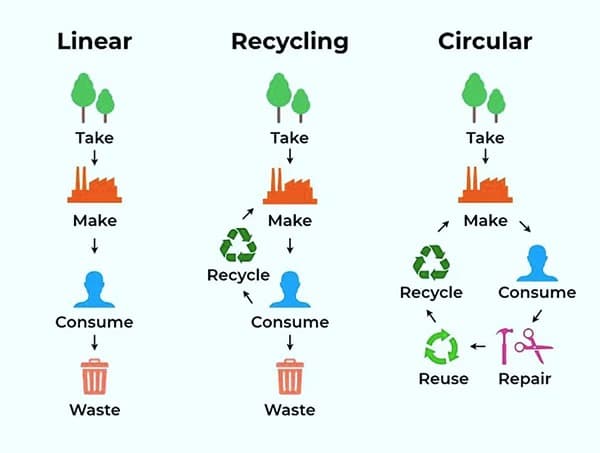
From an economic and environmental perspective, reuse is more advantageous than recycling or energy recovery, as the costs associated with collecting and preparing textile materials for reuse are partly offset by revenues from reuse, and the environmental impact is significantly reduced compared to new clothing production.